
How Can We Close the Cybersecurity Capacity Gap?
Growing cybersecurity responsibilities call for skilled professionals, sustained investment in skills development and closer ties between education and the labour market. These issues were the focus of the third session of the National Cybersecurity Conference, organised by Albania’s National Cyber Security Authority (AKSK) on 3 November 2026 in Tirana.
The session, titled “More Rules, More Responsibilities, Fewer Experts: How Can We Close the Cybersecurity Capacity Gap?”, examined how to prepare new professionals, develop the skills of existing staff, and attract and retain talent in the field.
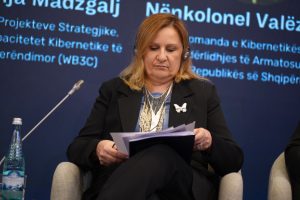
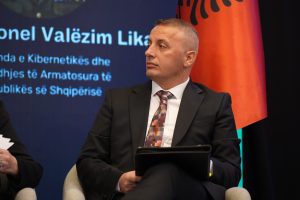
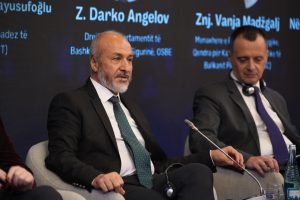
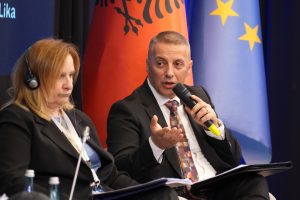
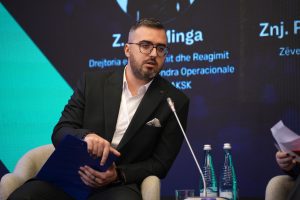
The panellists were Pranvera Skana, Deputy Minister of Defence, Prof. Dr. Ismail Kocayusufoğlu, Rector of the Canadian Institute of Technology (CIT), Darko Angelov, Director of the OSCE Department of Security Co-operation, Vanja Madžgalj, Strategic Projects Manager at the Western Balkans Cyber Capacity Centre (WB3C), and Lieutenant Colonel Valëzim Lika, representing the Cyber and Communications Command of the Armed Forces of the Republic of Albania. The session was moderated by Arli Minga, Director of AKSK’s Directorate for Incident Monitoring and Response and the SOC/C-SIRT Operations Centre. He linked the discussion to operational needs in monitoring, incident prevention and response.
People play a decisive role in translating legal requirements and investment in technology into effective protection. Minga highlighted the role of cybersecurity experts in responding promptly to threats, pointing to AKSK’s cooperation with operators of critical and important information infrastructure, the banking and telecommunications sectors, and international partners. Training, rapid information sharing and awareness-raising are part of this work. Building capacity also requires planning for the skills and resources that emerging technologies will demand.
Deputy Minister of Defence Pranvera Skana said that cybersecurity is comparable in importance to protecting the country’s physical borders. Developing a skilled workforce in this field is a long-term investment, supported in part by degree programmes at the Armed Forces Academy. She stressed that, alongside recruiting young people, institutions must develop the skills of existing staff and foster a culture of responsibility for protecting information and using online services.
Support during studies and clear employment prospects were identified as ways to encourage young people to pursue careers in cybersecurity. Skana highlighted the scholarships and employment opportunities offered by the Academy, linking them to the selection of talented candidates and the institution’s workforce needs.
Prof. Dr. Ismail Kocayusufoğlu discussed the role of universities, emphasising the importance of combining technical knowledge with ethics and hands-on experience. He said that preparing cybersecurity professionals requires curricula that keep pace with technological developments, as well as certification programmes and international cooperation. Given the pace of change, educational institutions need to respond more quickly. Waiting until the following academic year to update programmes can widen the gap between academic training and the skills required in the profession.
Darko Angelov highlighted cooperation between the public sector, the private sector and academia as a way to build capacity and identify new talent. He outlined the OSCE’s work with AKSK on prevention and awareness-raising, including activities for young people and groups that are more vulnerable online. He noted that ethical hacking and guidance on the responsible use of technical skills can help prepare future cybersecurity professionals. Public-private partnerships can also improve incident prevention and response by enabling partners to share expertise and coordinate procedures.
Vanja Madžgalj focused on the need to develop the existing workforce while preparing the next generation of cybersecurity professionals. She presented WB3C’s work to identify the needs of critical infrastructure operators across the region as a basis for its 2027 capacity-building programmes. The areas identified included industrial control system security, incident response, business continuity, exercises and coordination across interconnected sectors.
Madžgalj stressed that broadening the talent pool requires more opportunities for women and young people outside capital cities. Connecting education with practical experience, offering industry mentoring and creating clear career development pathways can help align skills with workplace needs. To address the departure of experts, she proposed expanding the exchange of knowledge and experience among institutions, businesses and universities.
Lieutenant Colonel Valëzim Lika drew on the experience of the Armed Forces to show how academic programmes, work placements, national and international exercises, and hackathons can help identify talent. Once candidates are selected, advanced training supports their professional development. Lika also noted that experts trained in the Armed Forces can go on to contribute to public administration and the private sector, extending the benefits of that investment to cybersecurity across the country.
The discussion highlighted the need for workforce policies that cover the full career pathway, from early exposure to cybersecurity and academic training through to practical experience, employment and continuous skills development. For AKSK, institutions, operators and partners, this requires coordinated action to ensure that workforce capacity keeps pace with legal responsibilities and technological change.