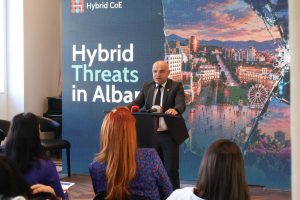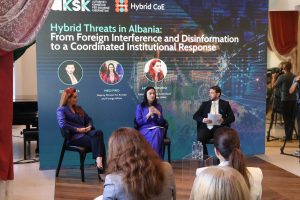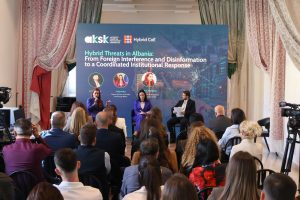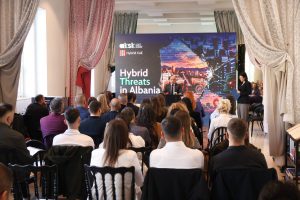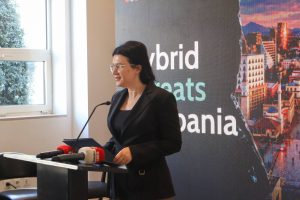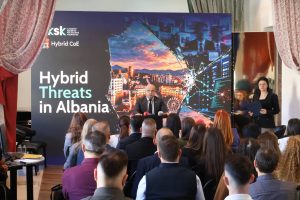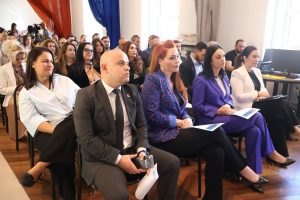
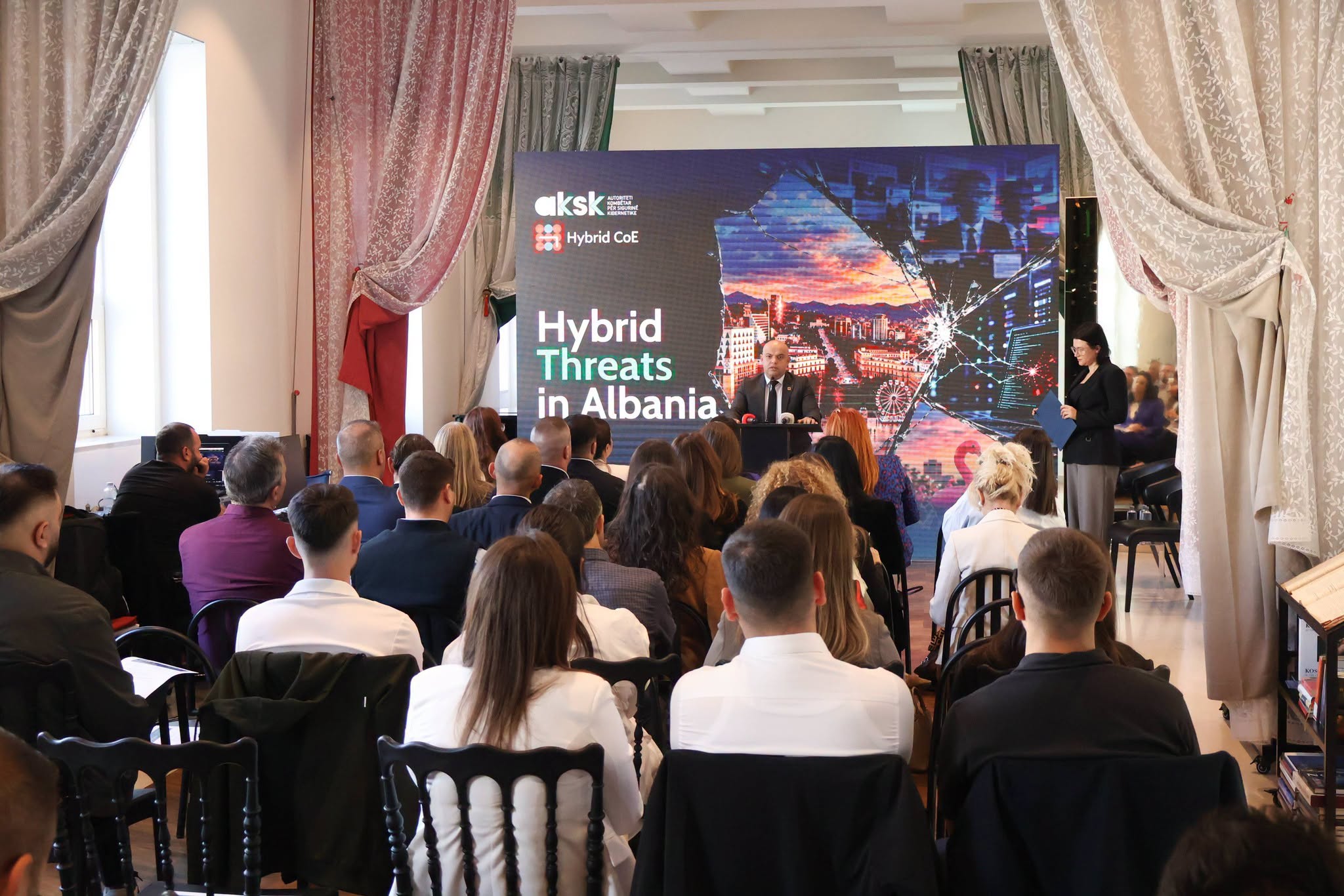
The National Cyber Security Authority (AKSK), in cooperation with the European Centre of Excellence for Countering Hybrid Threats (Hybrid CoE), organised the “Hybrid Threats in Albania” workshop, focusing on disinformation, foreign interference and their impact on Albania. The event brought together institutional representatives, experts, journalists and communication professionals to discuss the interplay between cyber threats and information manipulation, as well as a coordinated response to these challenges.
The Director General of AKSK and National Cyber Security Coordinator, Bledar Kazia, emphasised that cyber incidents are often accompanied by disinformation aimed at undermining public trust in institutions. Referring to recent cases, he highlighted the manipulation of videos and photographs using artificial intelligence, as well as the spread of false news, stressing the importance of media professionals understanding disinformation techniques and their links to potential foreign interference. Kazia underlined that Albania, as a NATO member and an EU candidate country, is strengthening its defensive capabilities, including dedicated teams for analysing information from open sources.
Martha Turnbull, Head of the Community of Interest on Hybrid Influence at Hybrid CoE, emphasised that Albania, like other European countries, faces hybrid threats targeting the information environment, particularly through disinformation. She stressed that strategies, legislation and interinstitutional coordination must be complemented by the involvement of the media, civil society and non-governmental organisations to strengthen the collective ability to identify and counter these threats.
During the panel discussion, Deputy Minister for Europe and Foreign Affairs, Megi Fino, addressed the timely verification of information, trustworthy communication with citizens on European integration, and cooperation with NATO, the EU and Hybrid CoE. She emphasised the need for daily institutional coordination in response to foreign information manipulation. From the media perspective, the Chair of the Audiovisual Media Authority (AMA), Armela Krasniqi, highlighted the importance of media literacy and source verification, while also presenting AMA’s cooperation with TikTok and X on reporting harmful content.
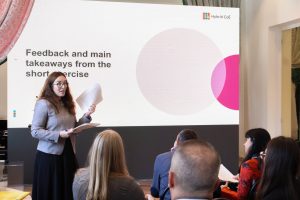
The programme continued with presentations and case studies on hybrid threats and disinformation, alongside sessions led by Hybrid CoE experts on information manipulation during electoral processes. An interactive exercise gave participants the opportunity to discuss how to identify these threats and respond to them.